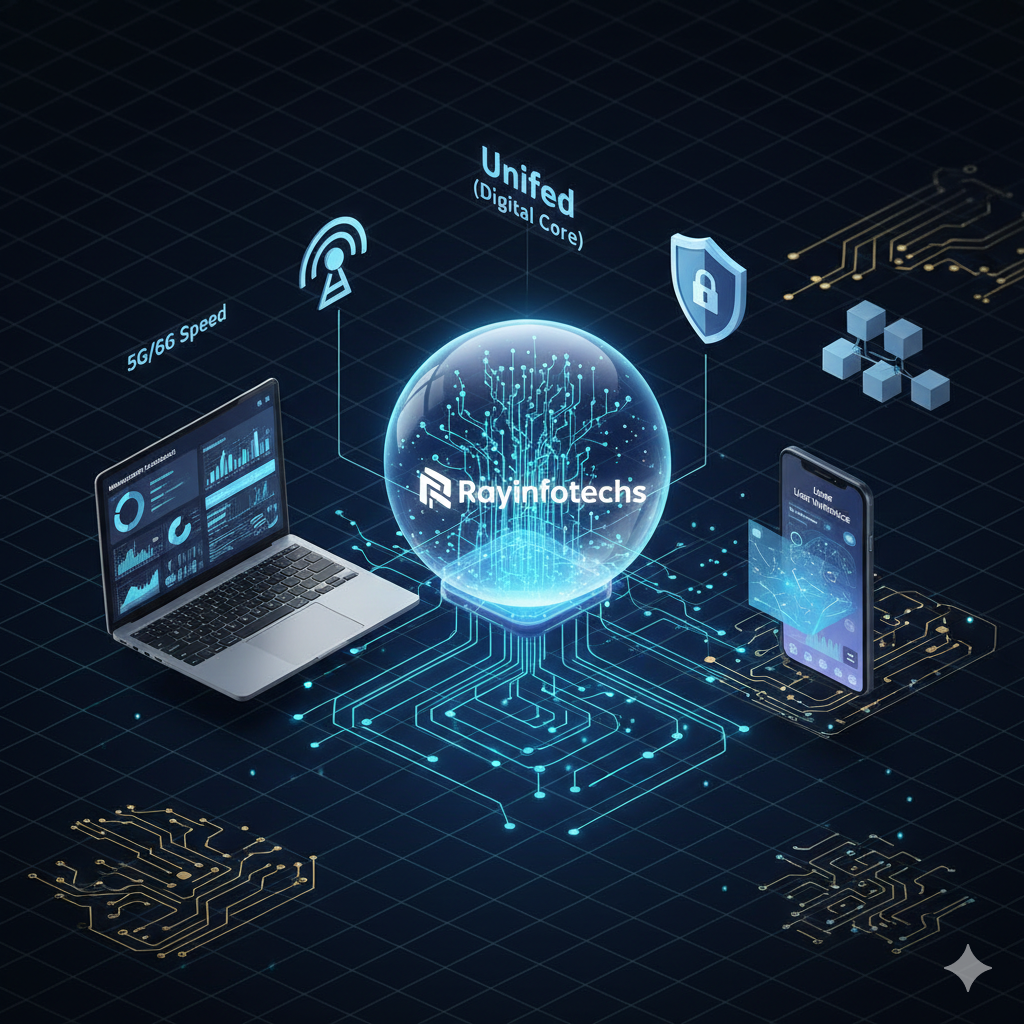
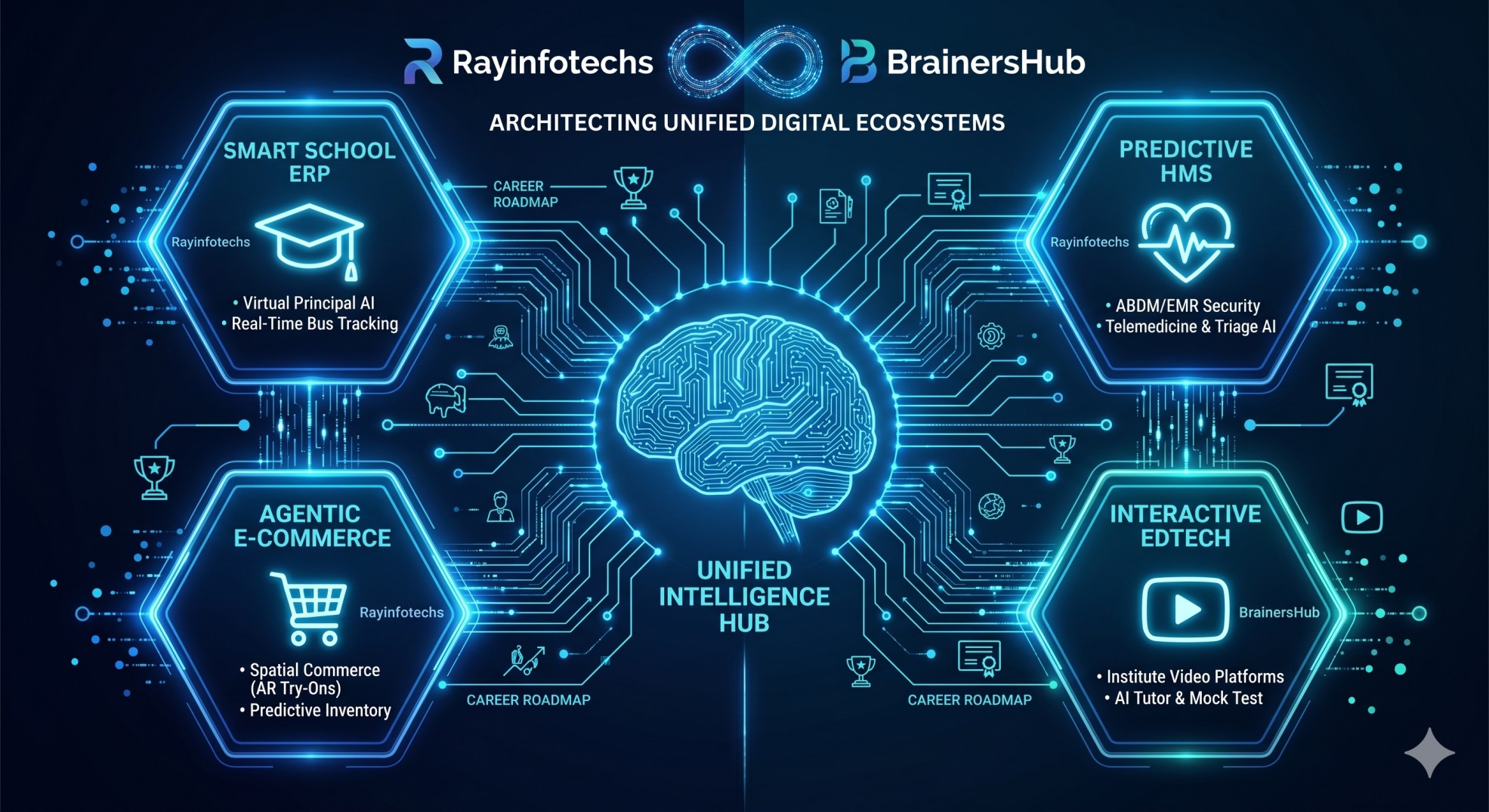
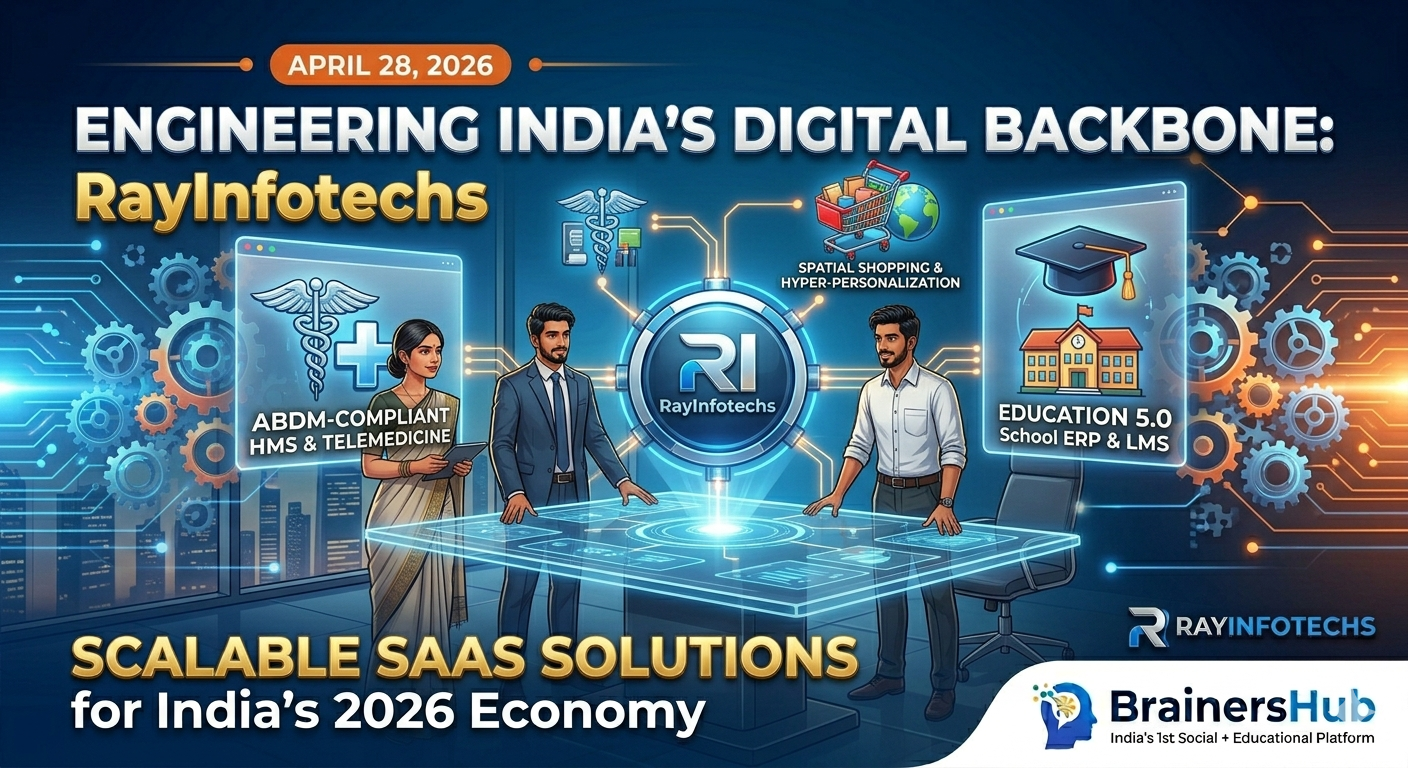
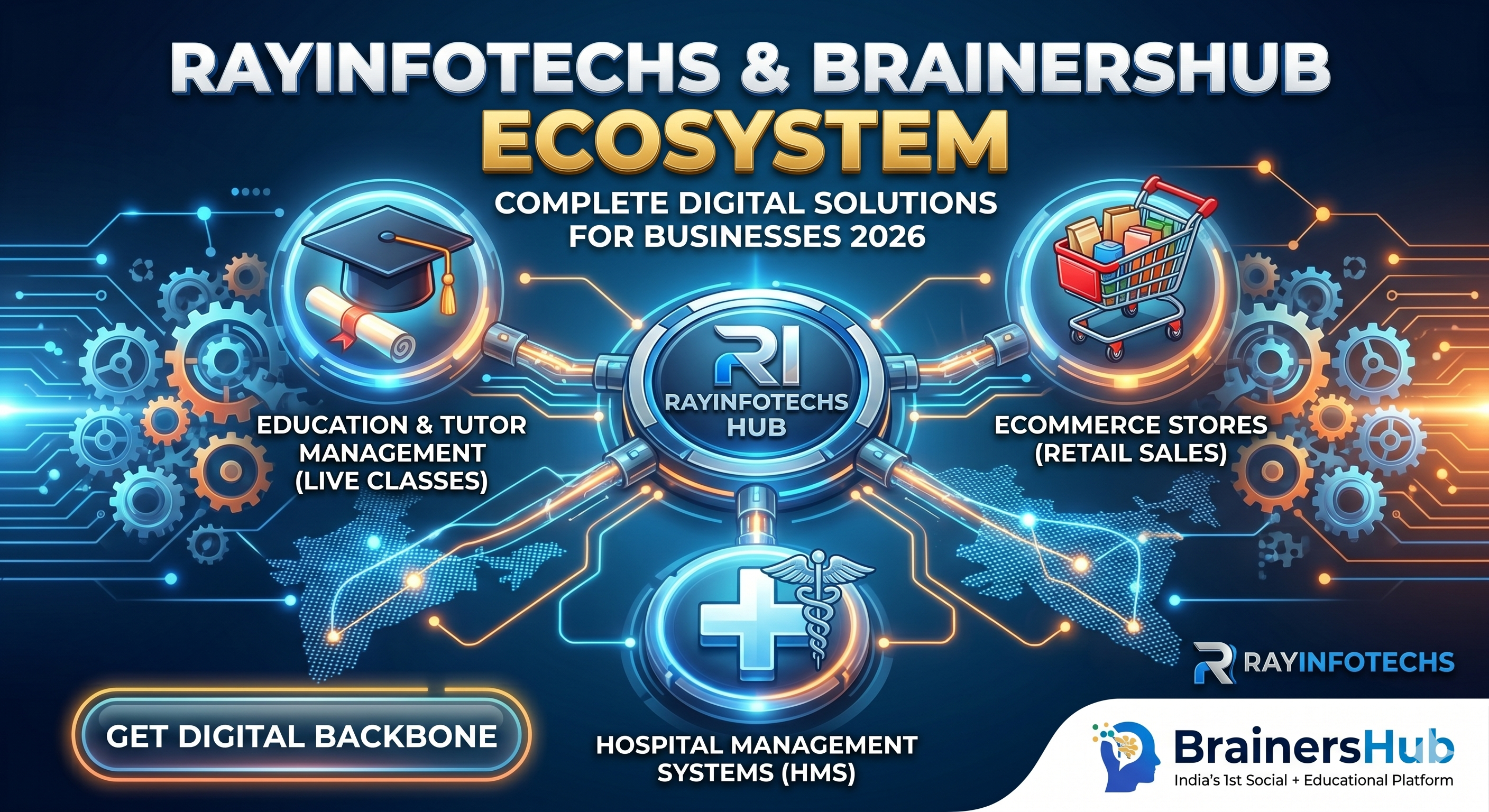
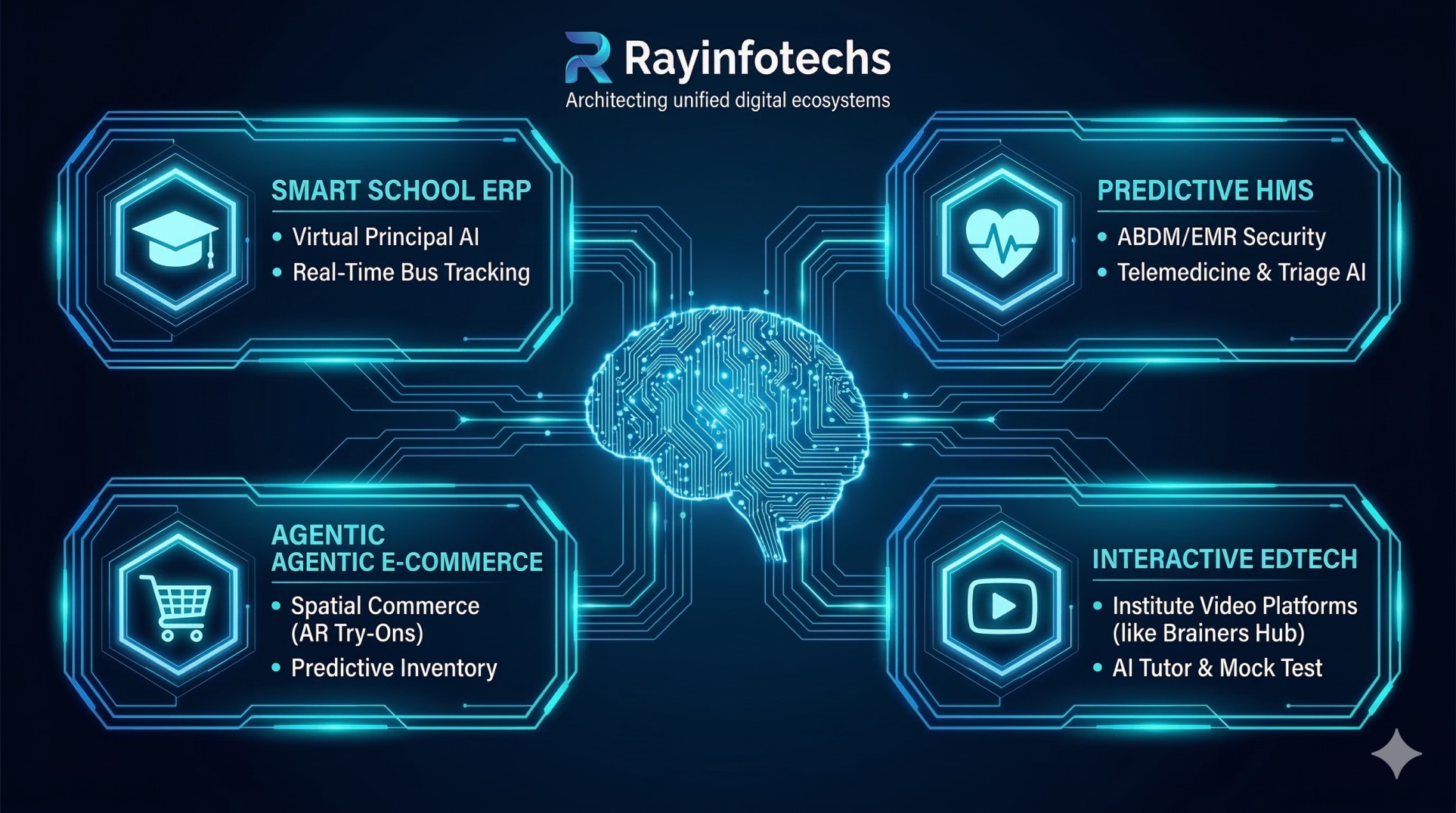
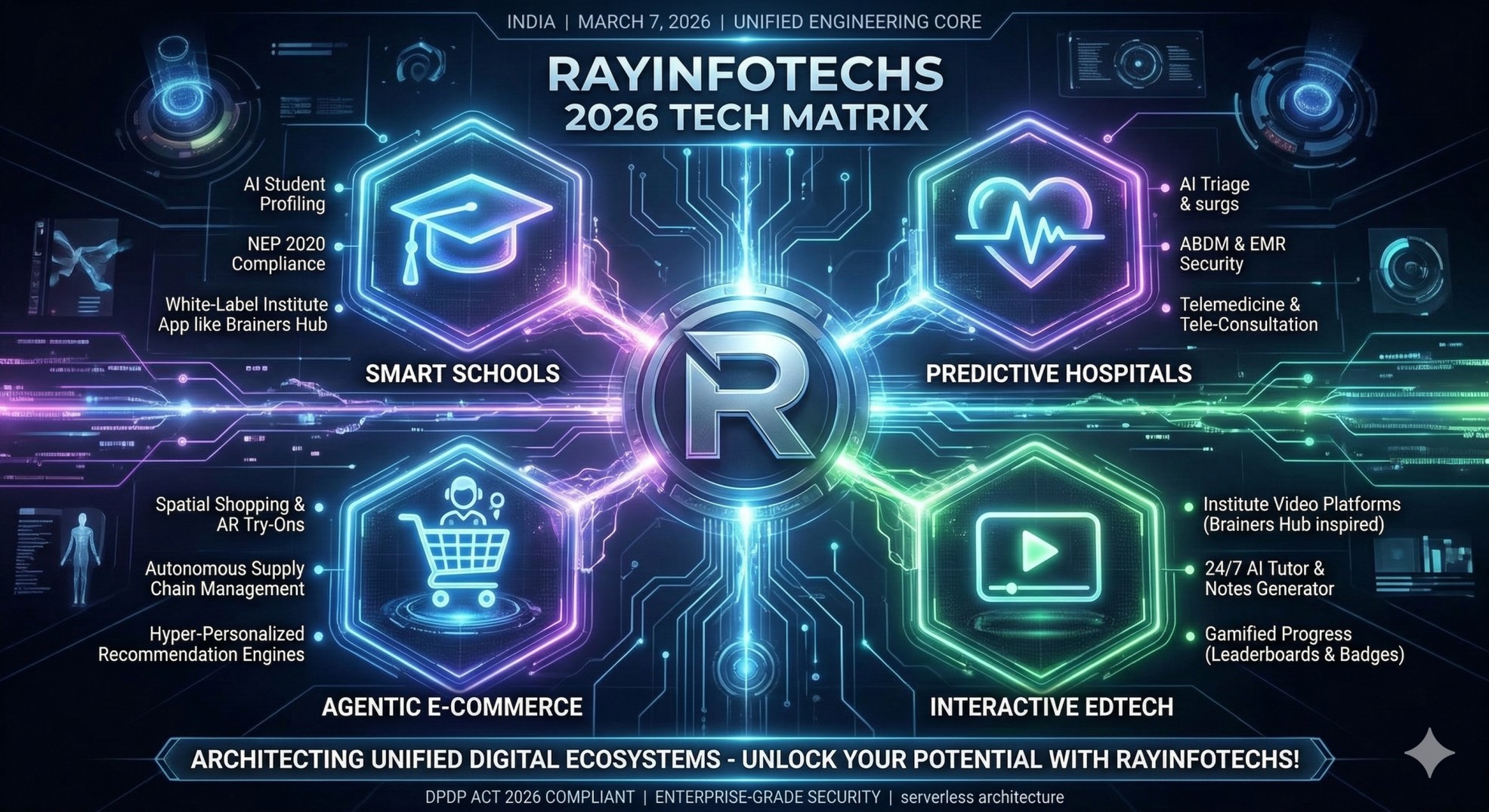
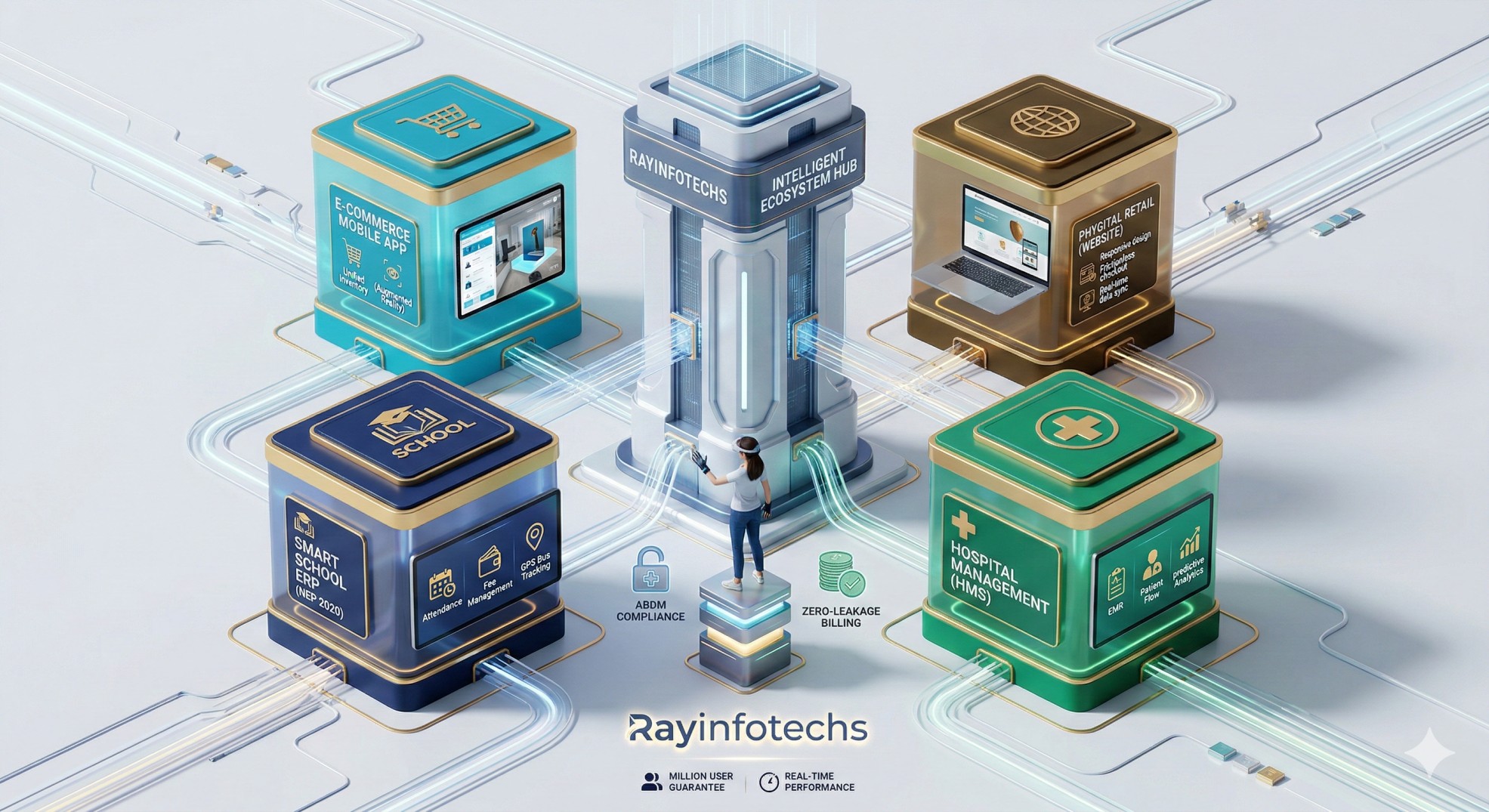
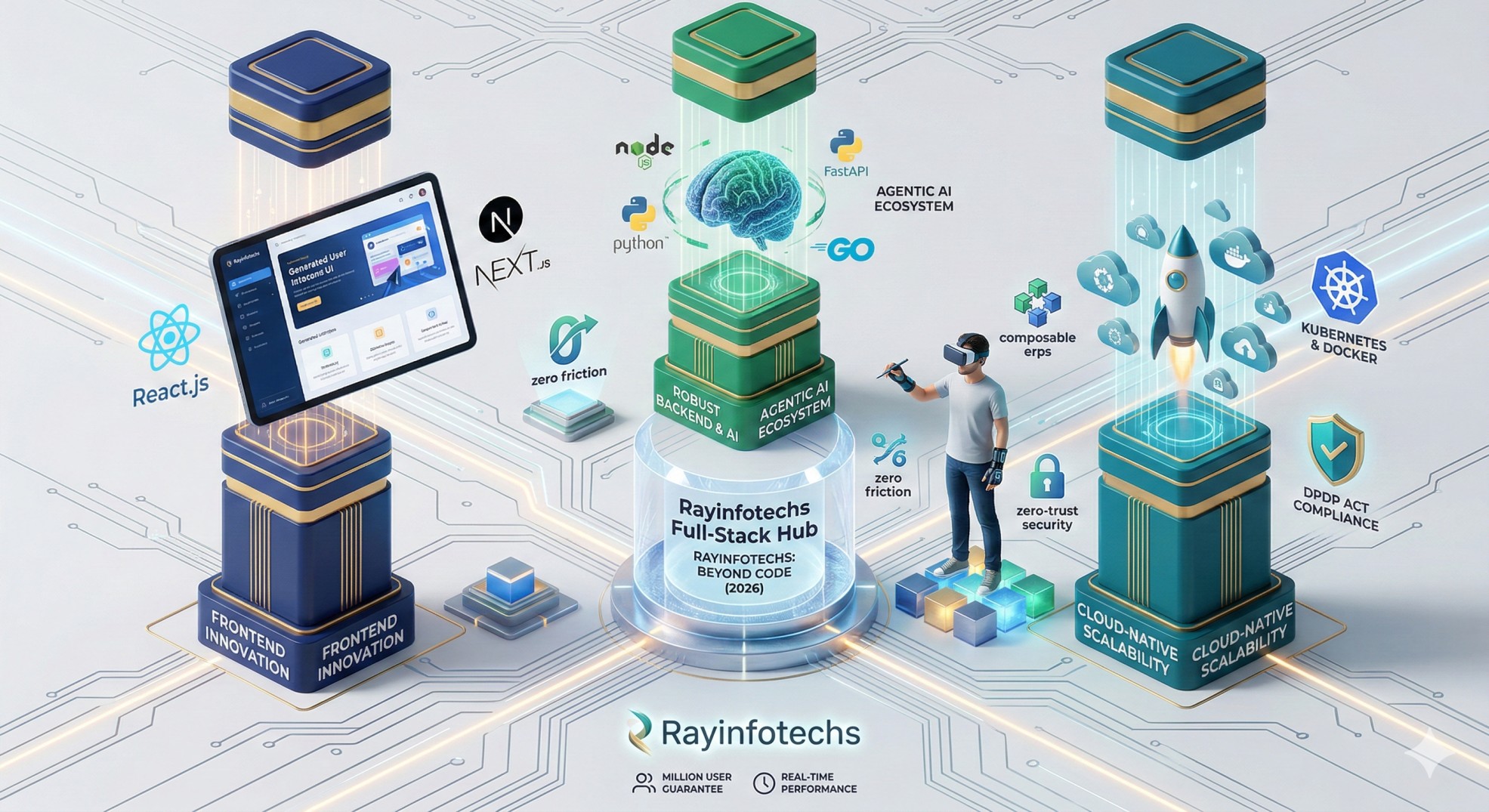
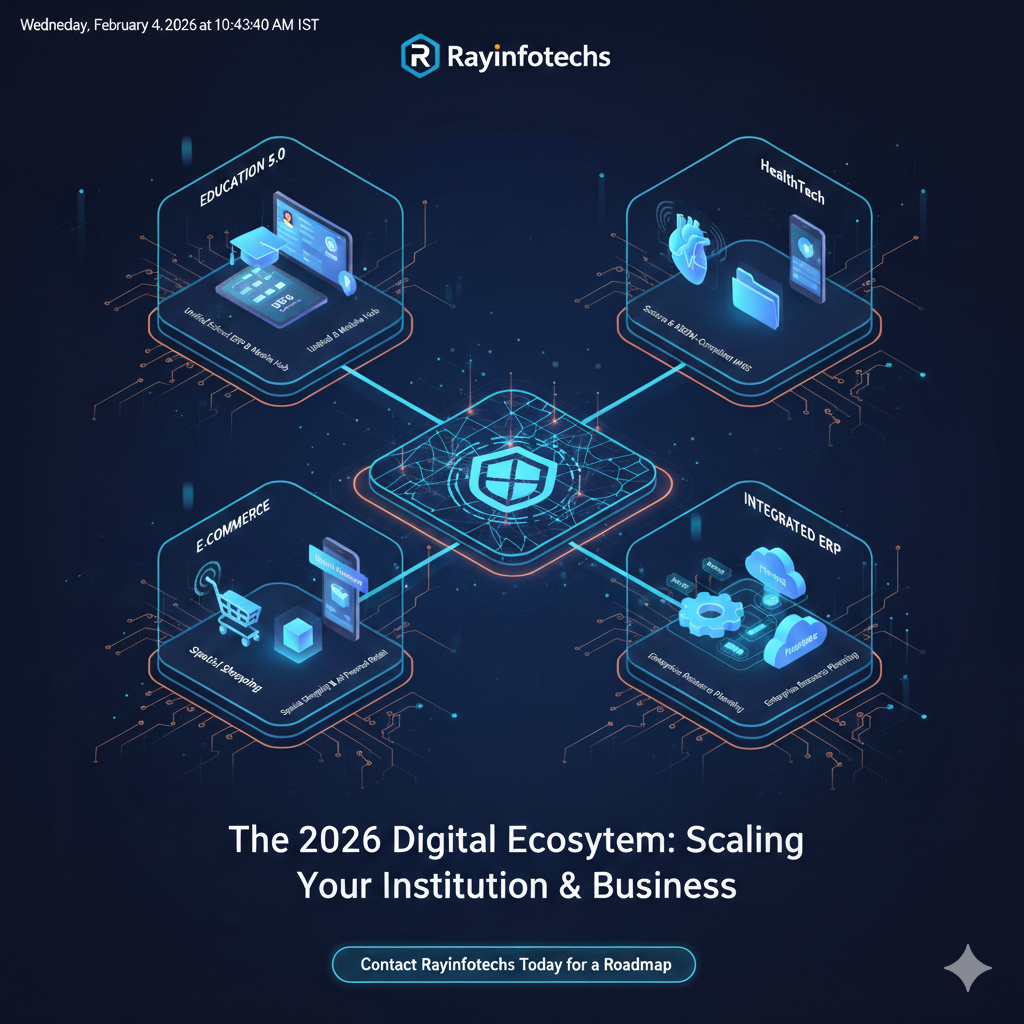
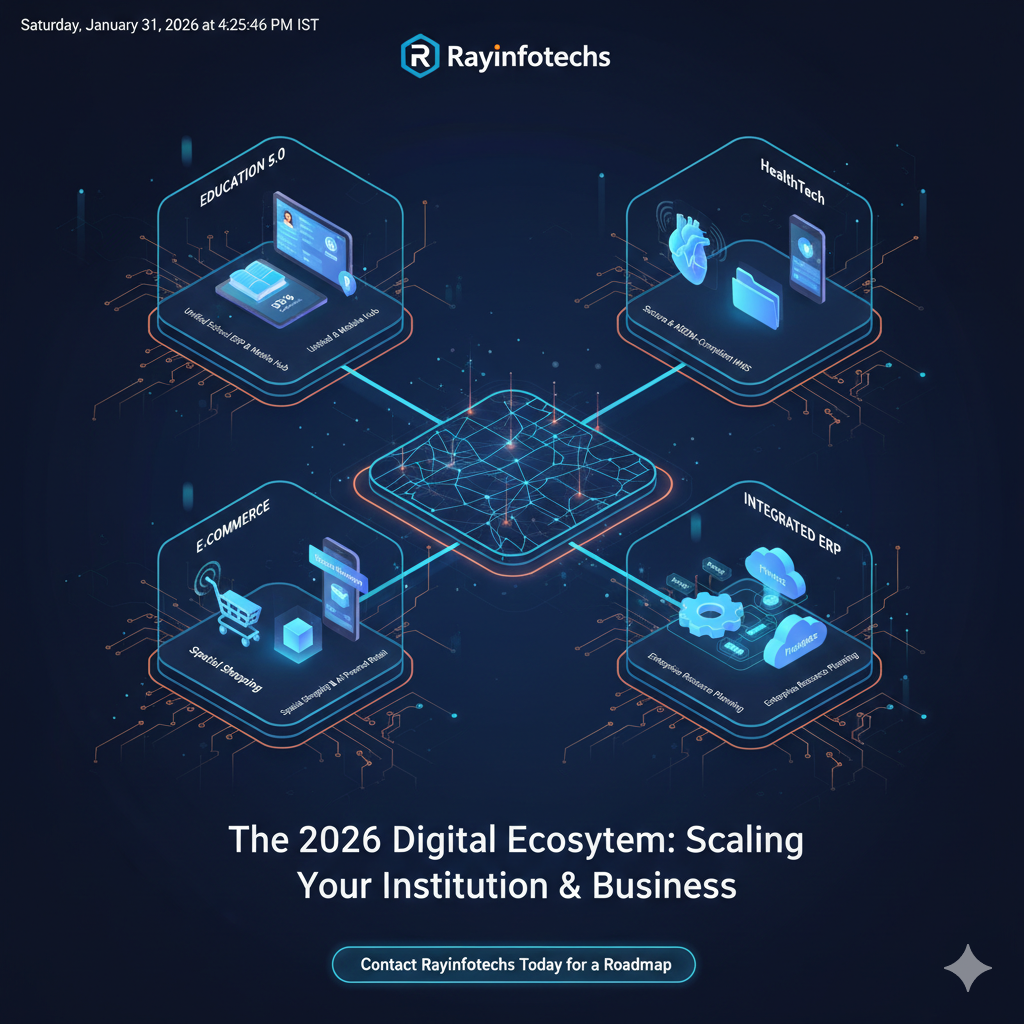
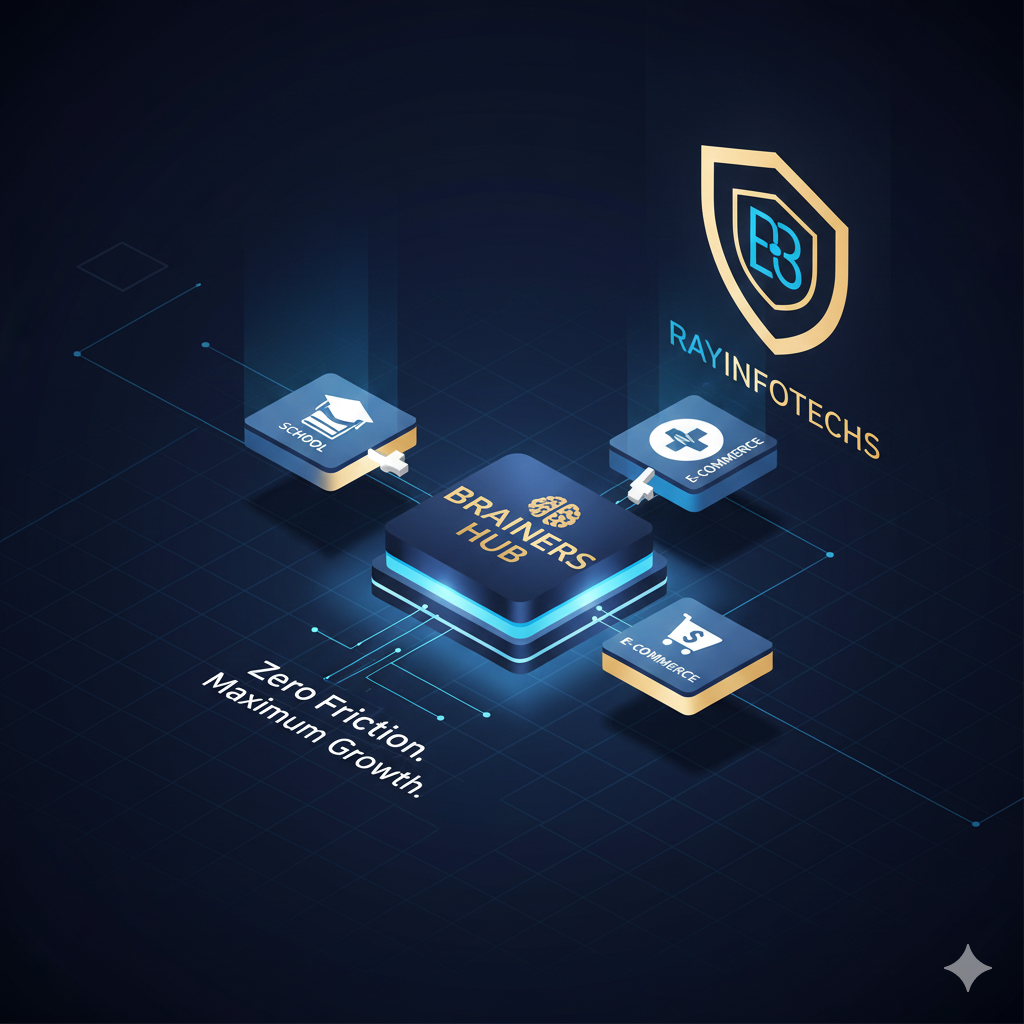
In 2026, a "standalone" website is a relic of the past. To truly scale, modern enterprises need a Unified Digital Ecosystem where the web portal and mobile app function as a single, intelligent unit. Rayinfotechs is leading this charge, moving beyond trad
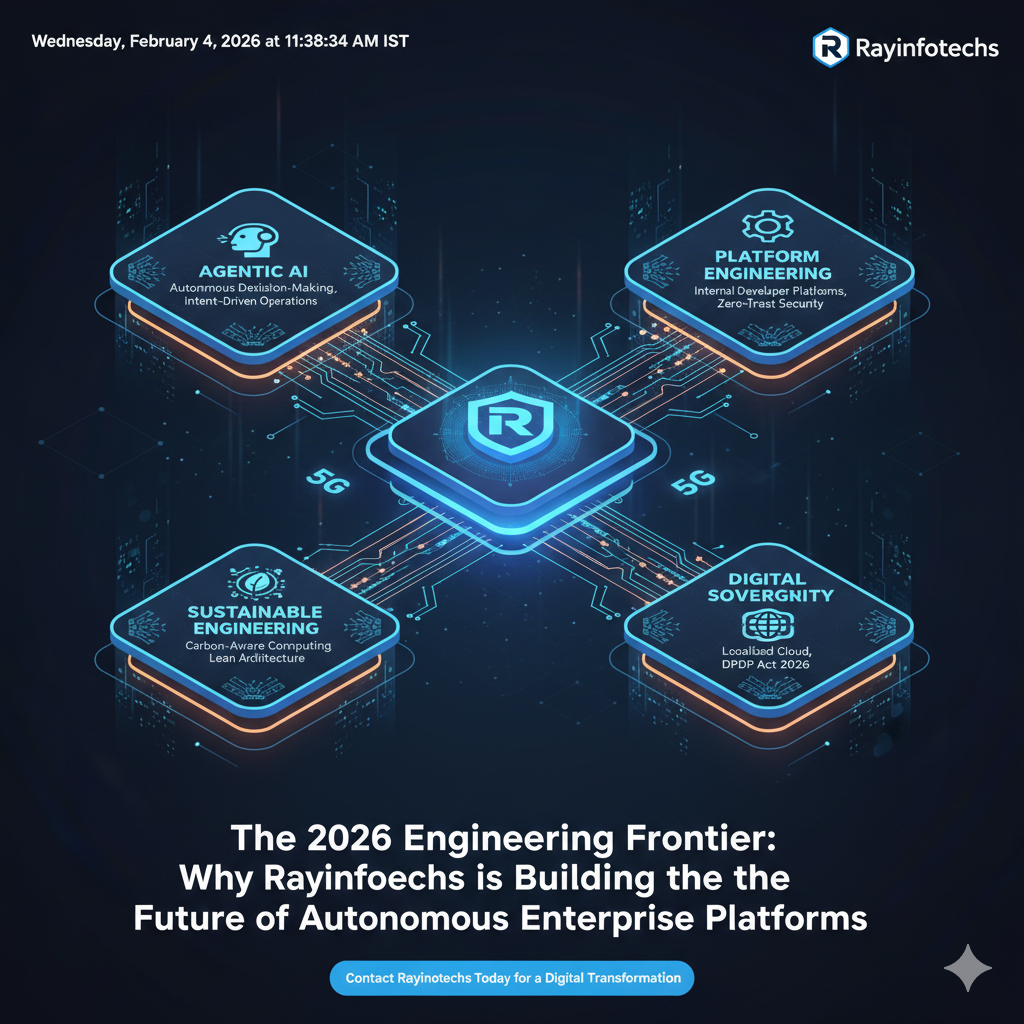
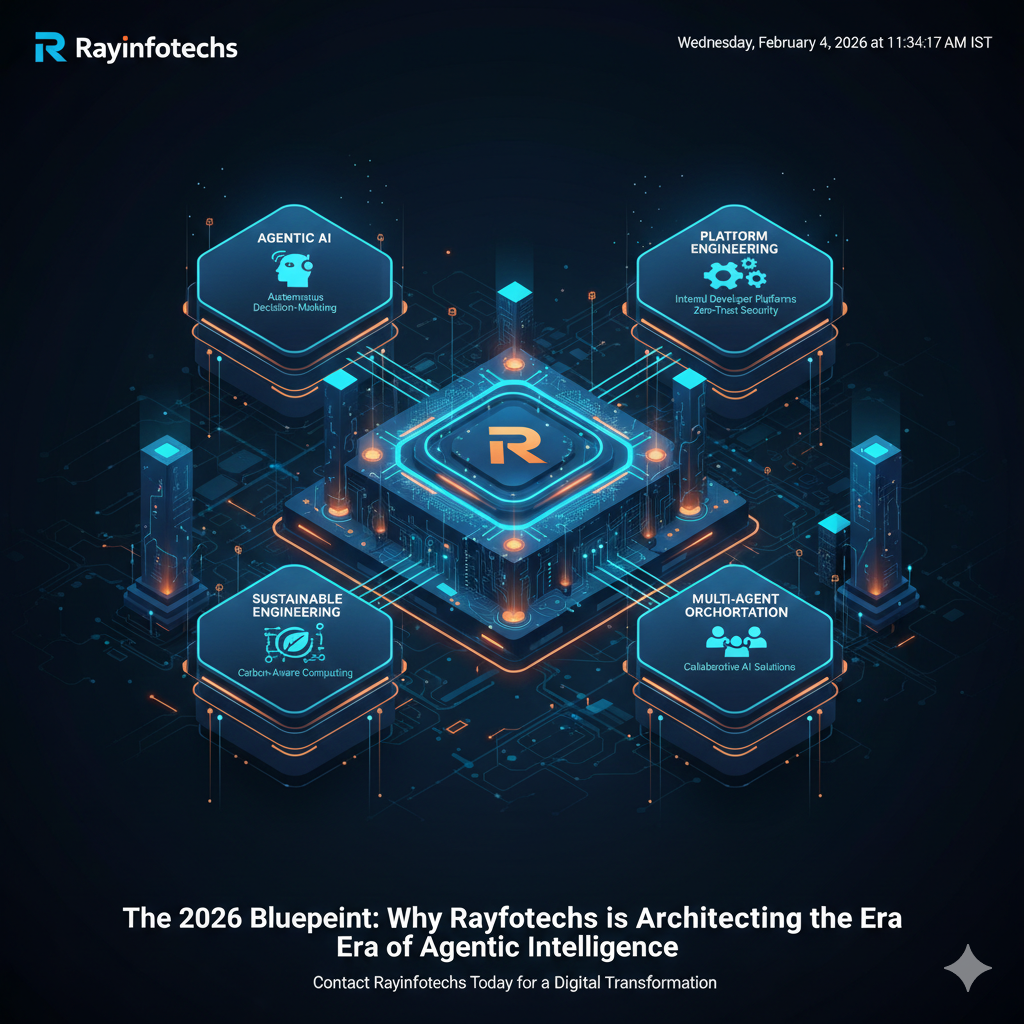
The 2026 update introduces an autonomous AI layer across all Rayinfotechs platforms:
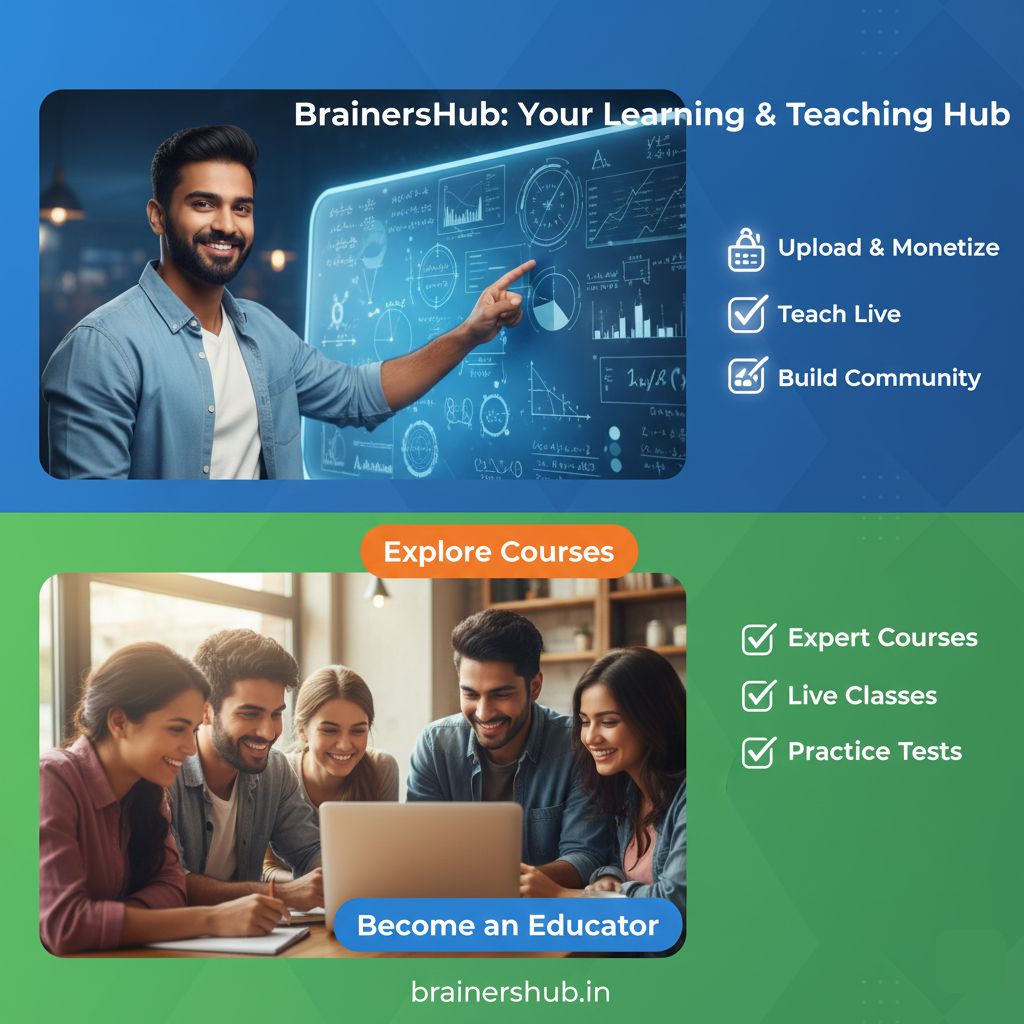
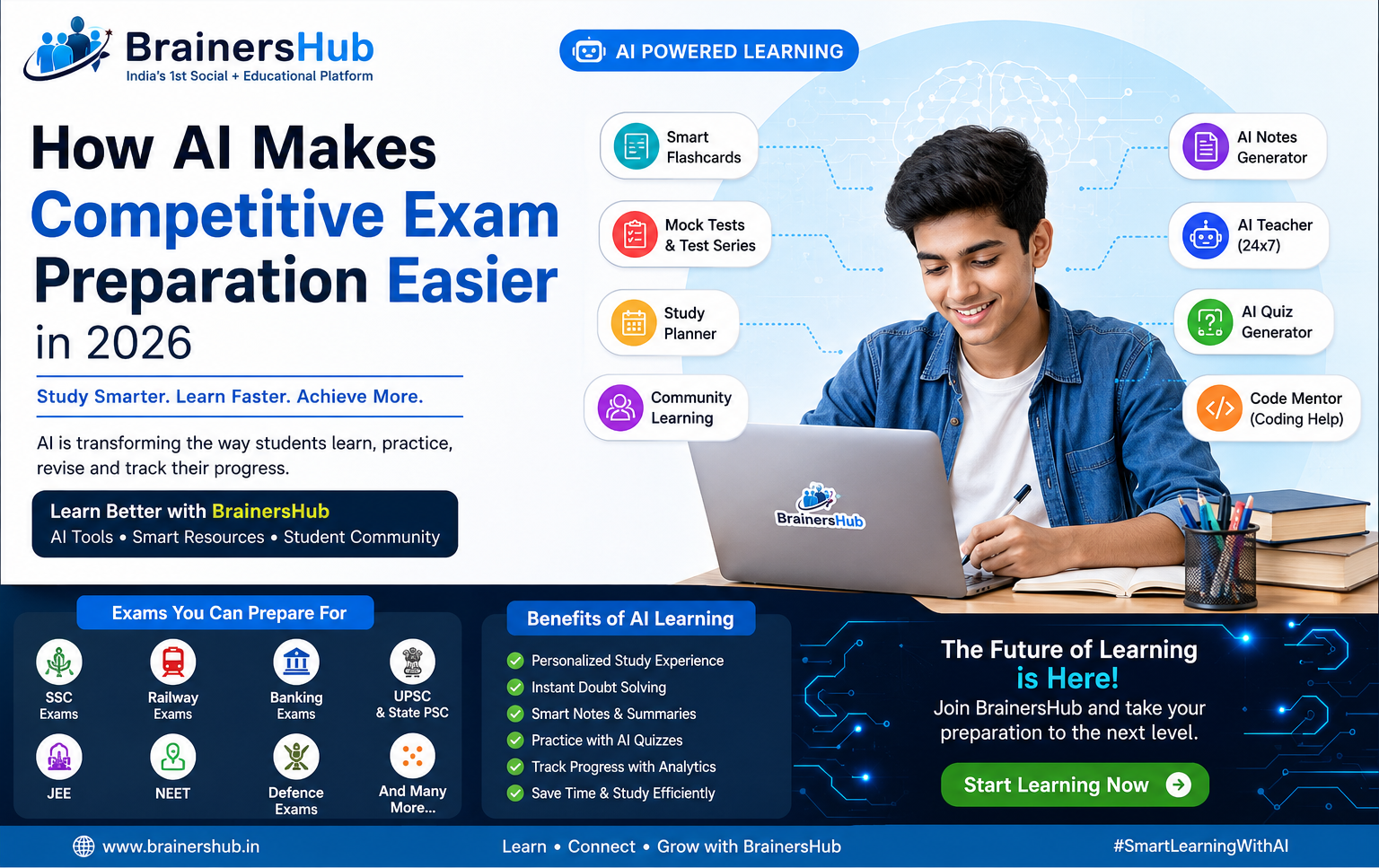
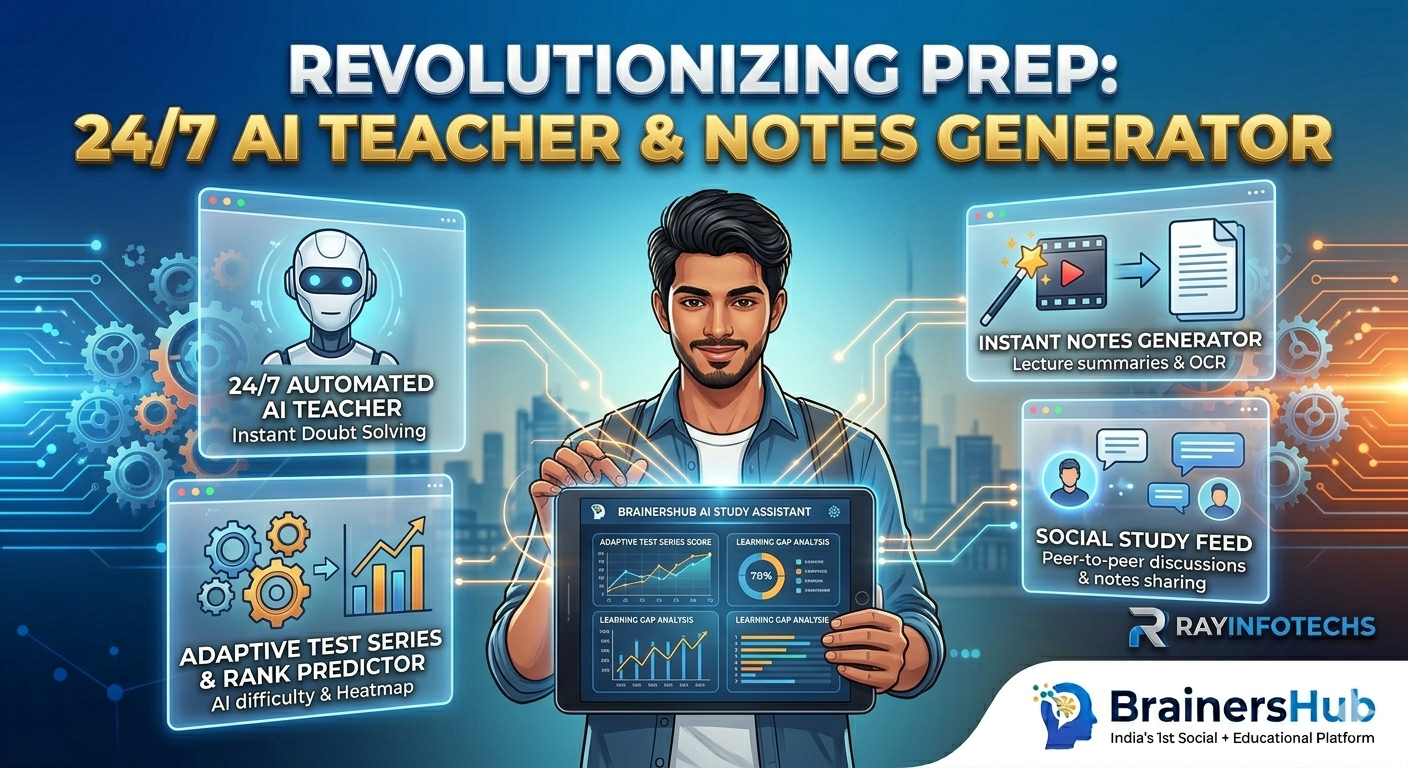
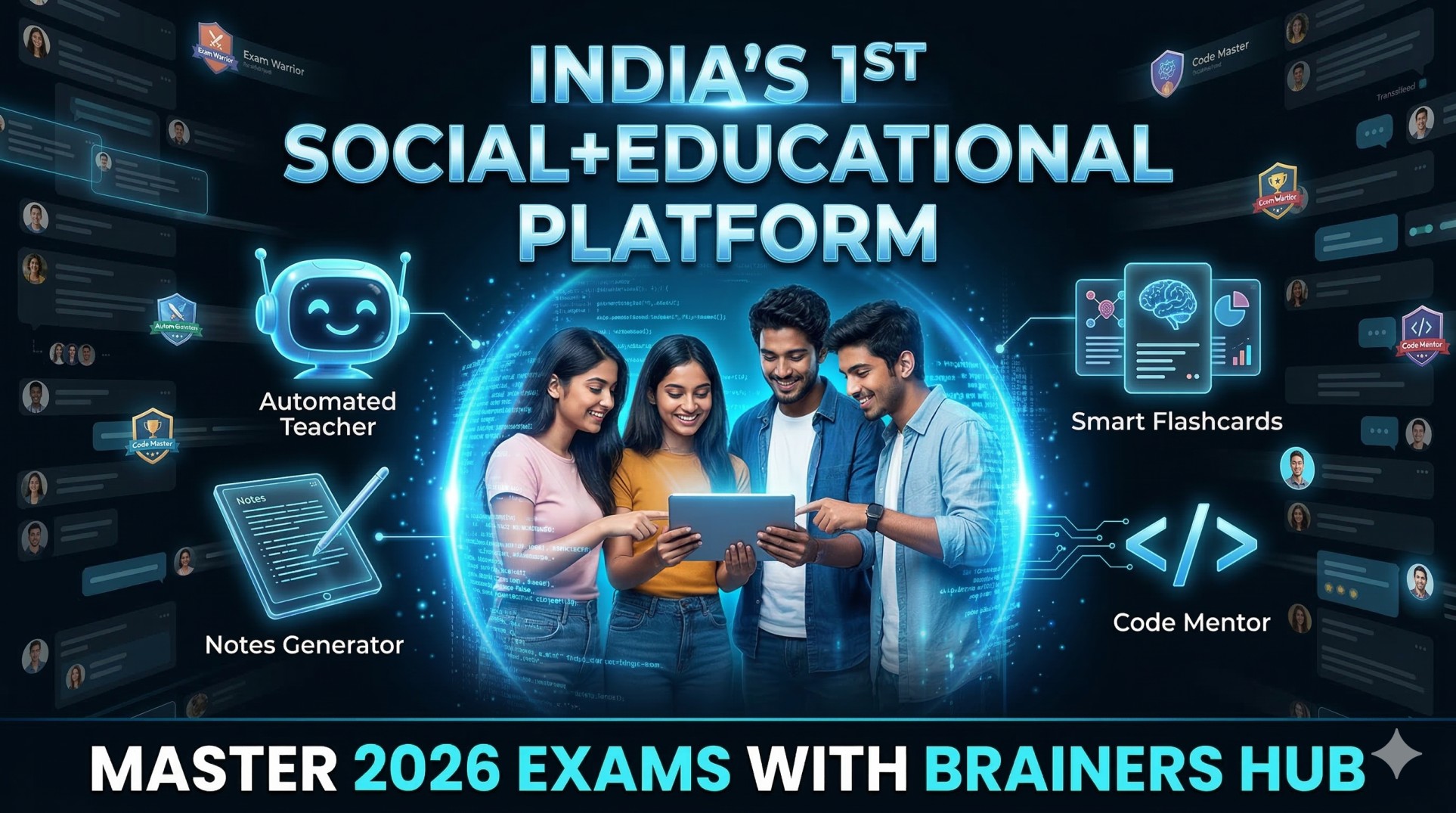
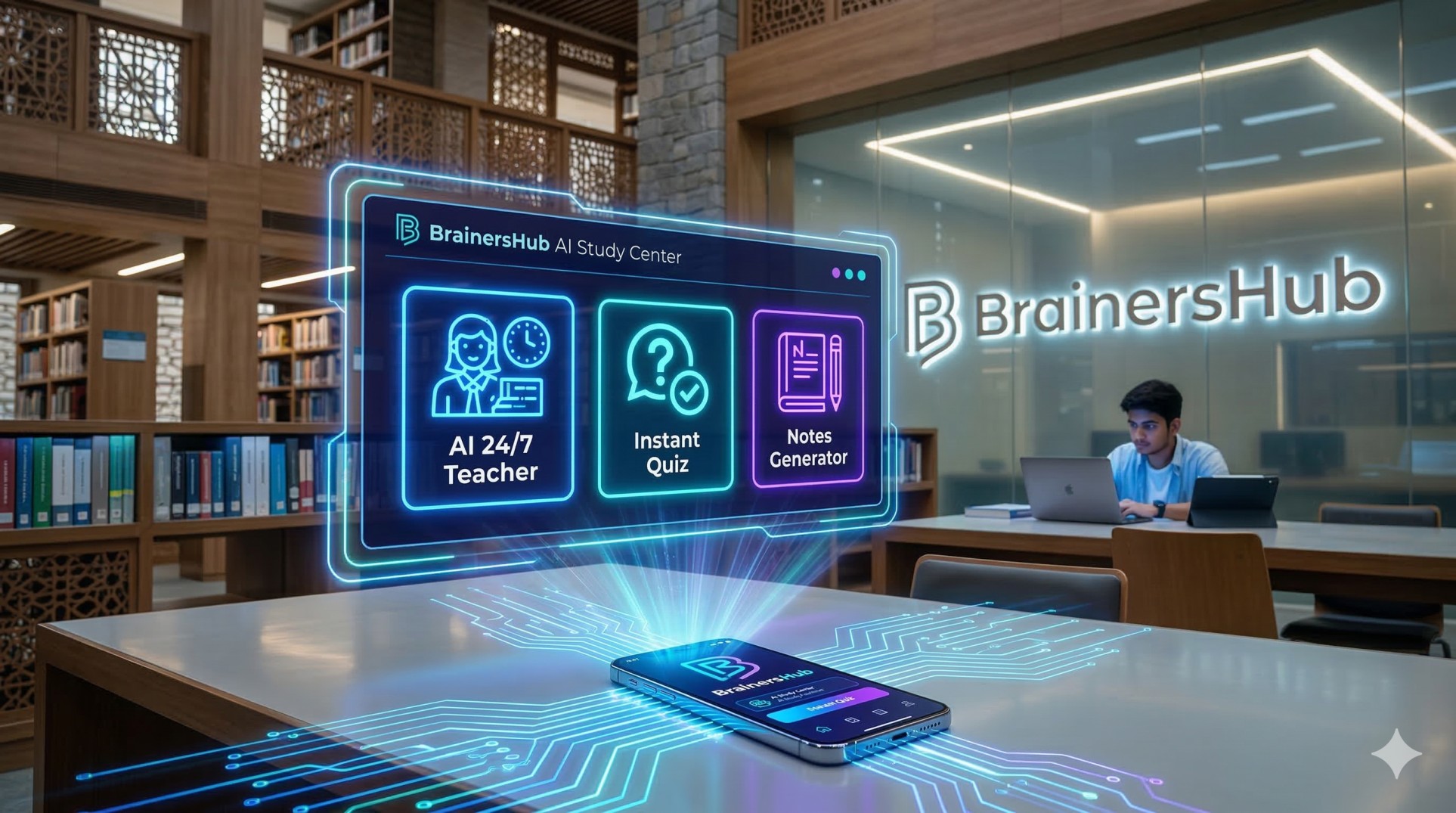
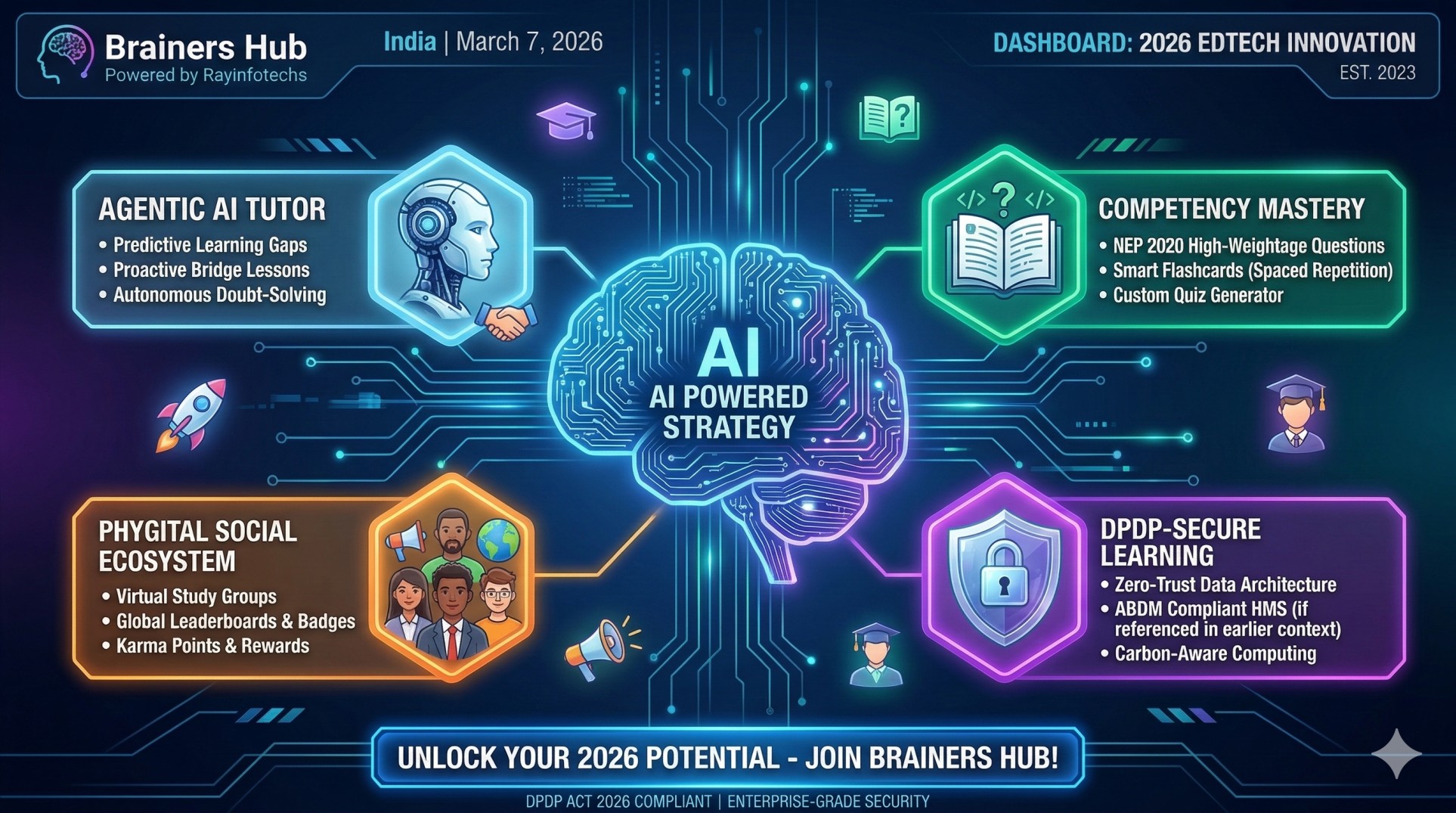
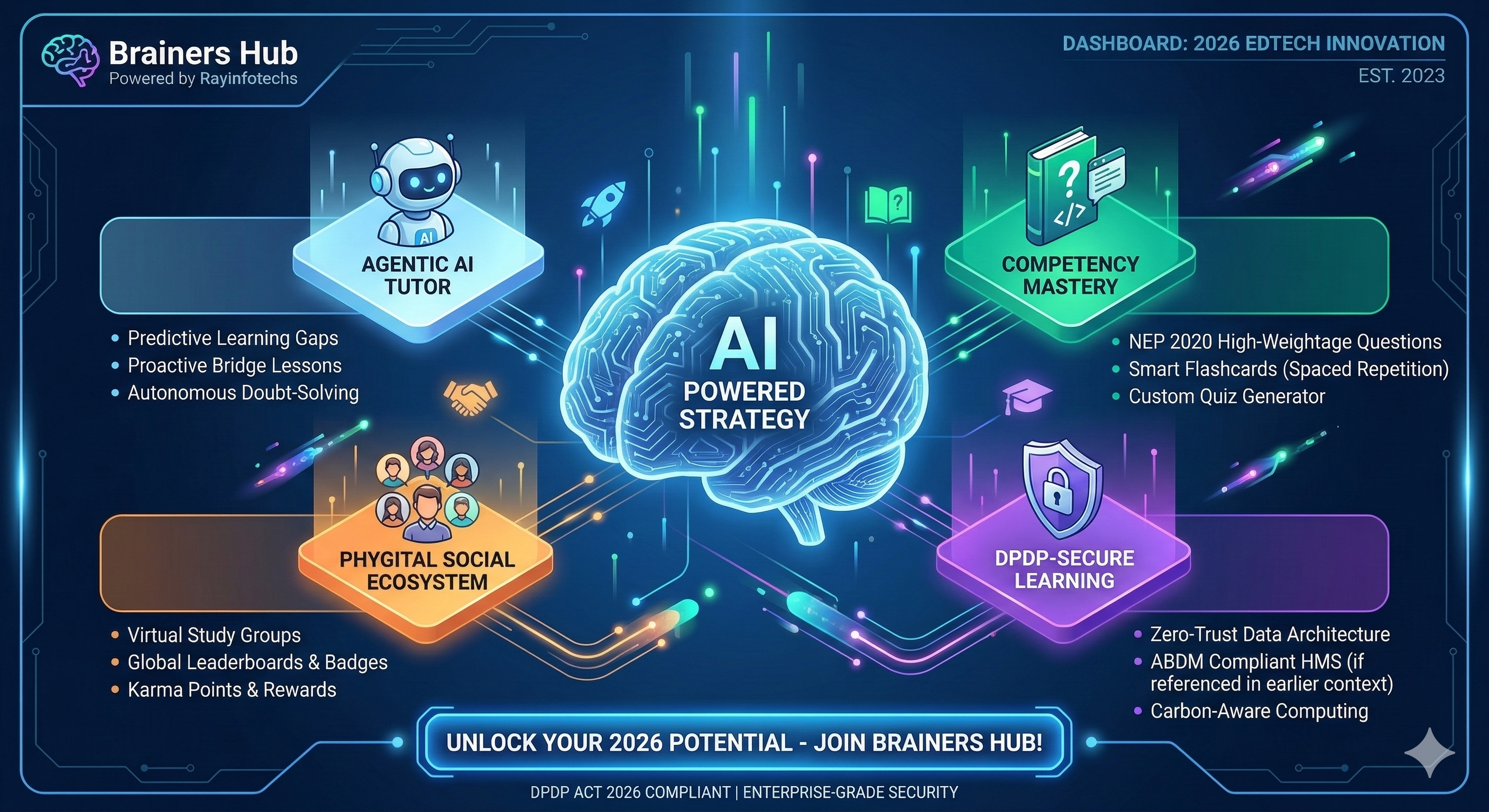
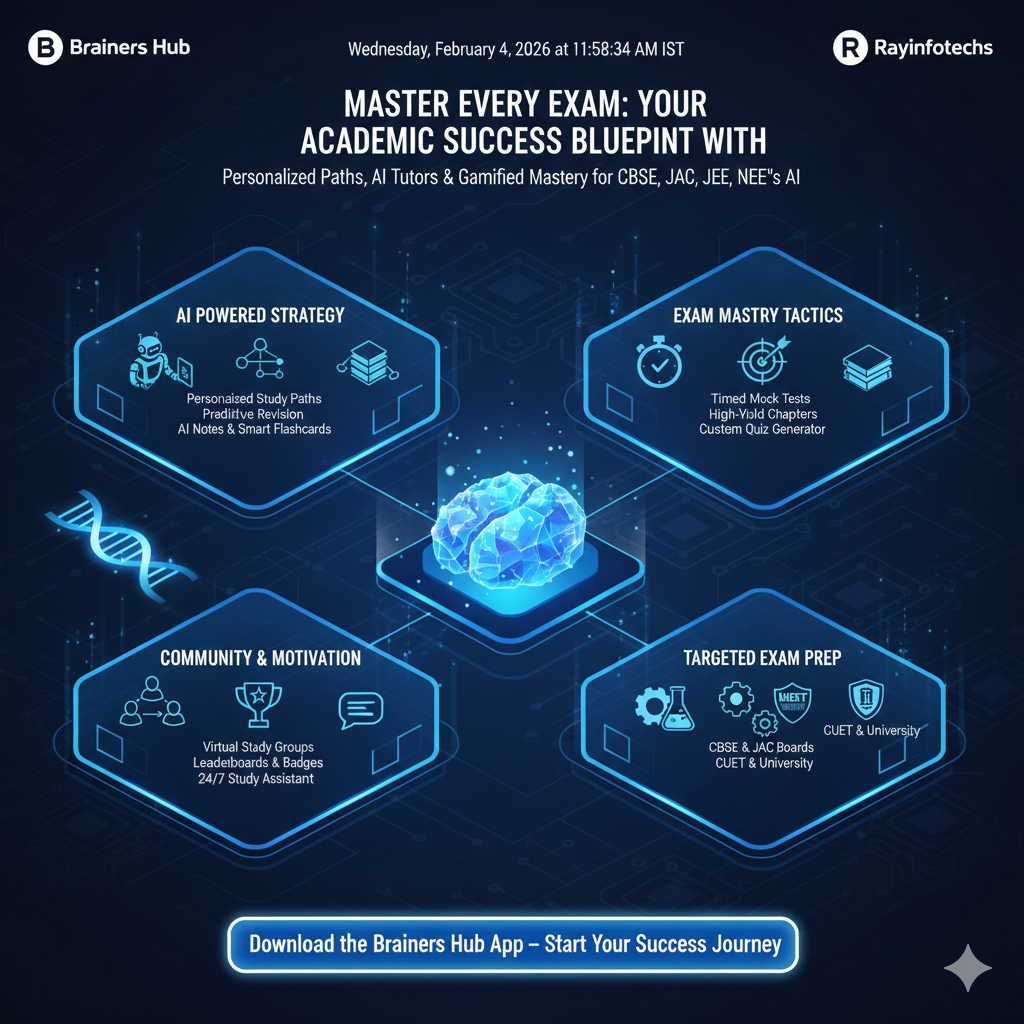
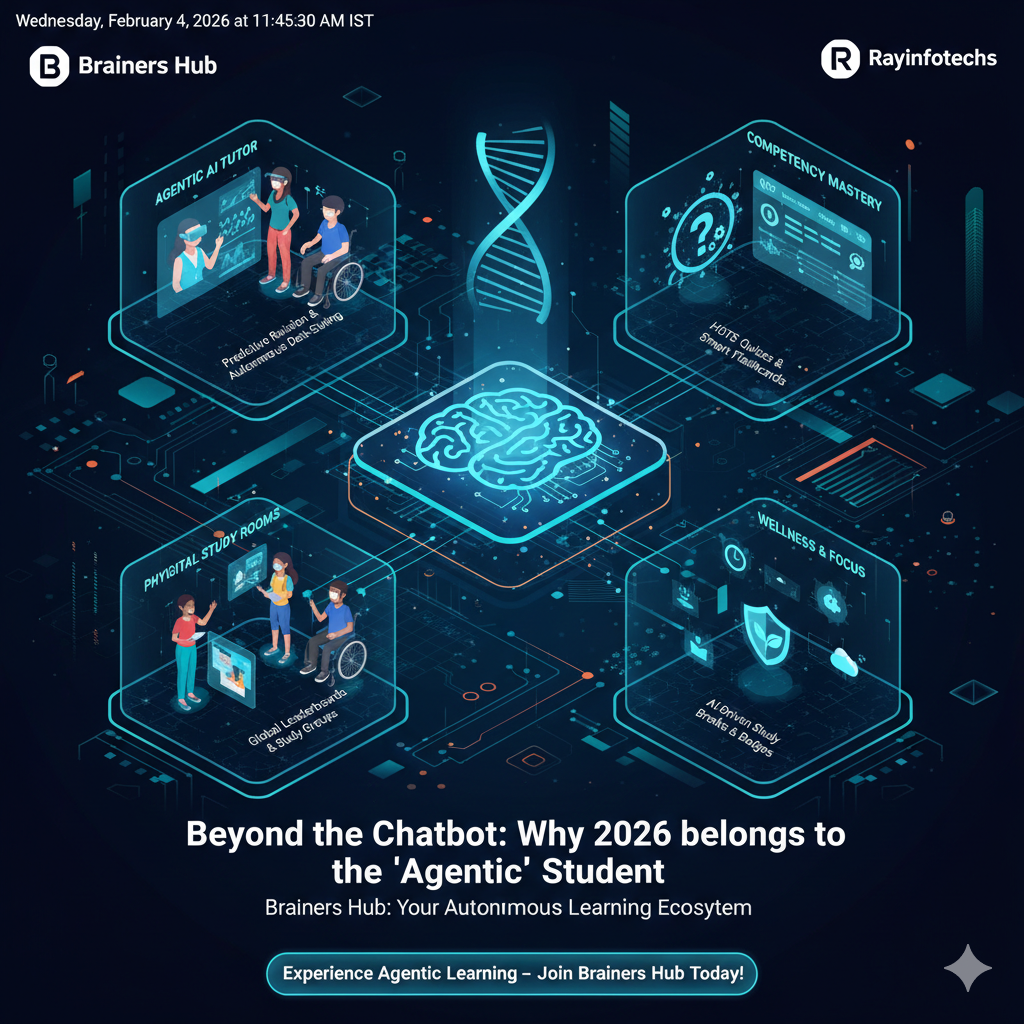
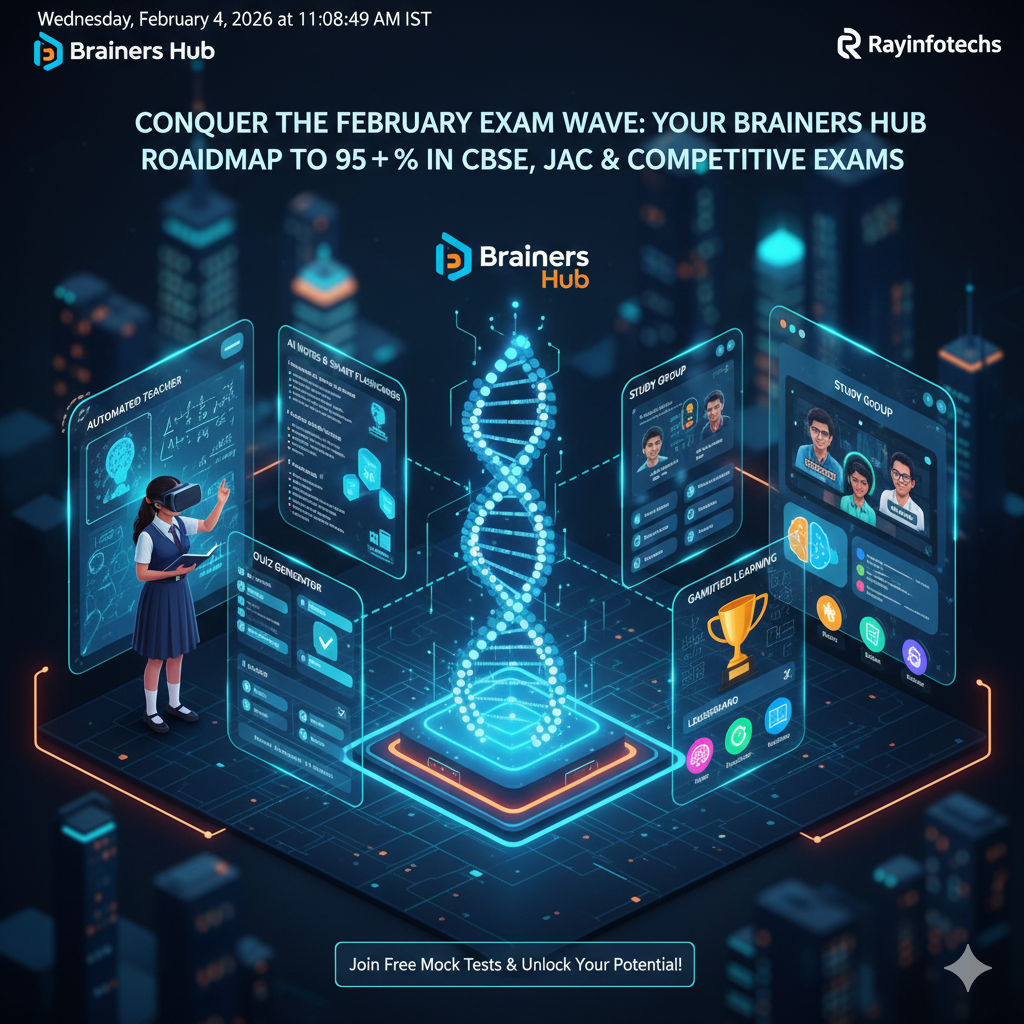
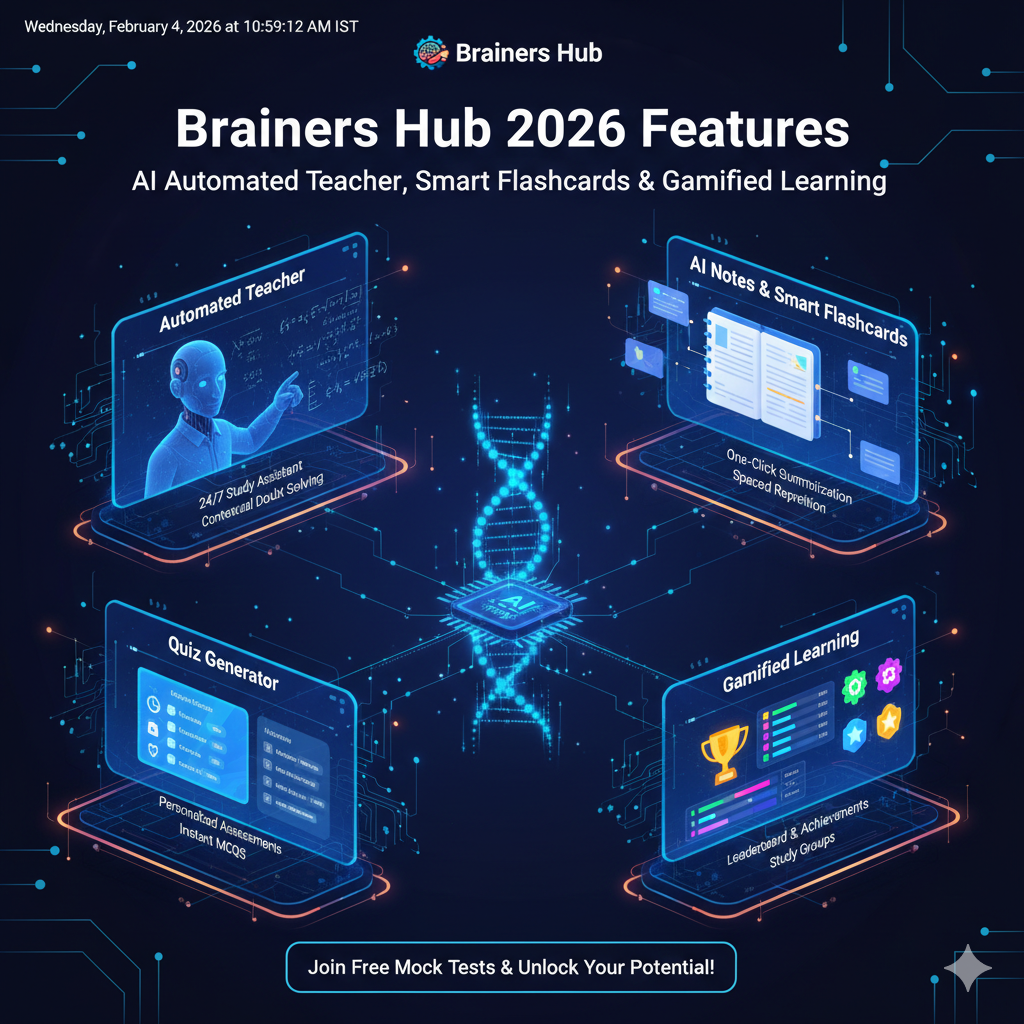
For Education (Brainers Hub): Our AI agents don't just flag student absence; they check previous health records, draft personalized parent messages, and suggest remedial study plans—all automatically.
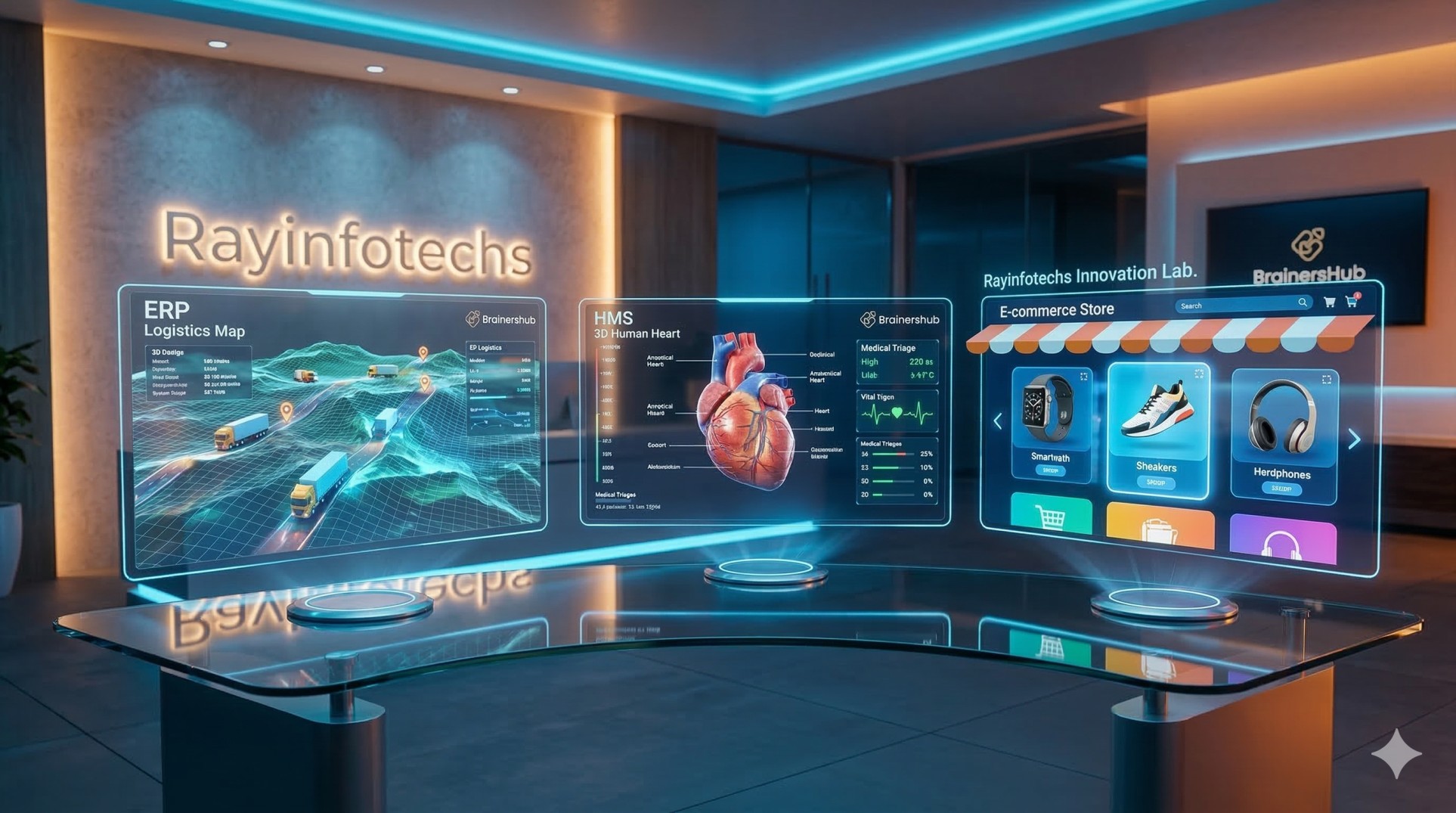
For Healthcare (HMS): A new AI Scribe feature for mobile and web. It listens to doctor-patient consultations (with consent) and auto-fills 80% of Electronic Medical Records (EMR), allowing doctors to focus on patients, not laptops.
With India’s rollout of 5G and early 6G trials, speed is the new currency.
Real-Time Inventory: Our web and app sync now uses Edge-Cloud Architecture. If a student pays a fee on the mobile app or a patient books a slot via the web, the records update everywhere—instantly.
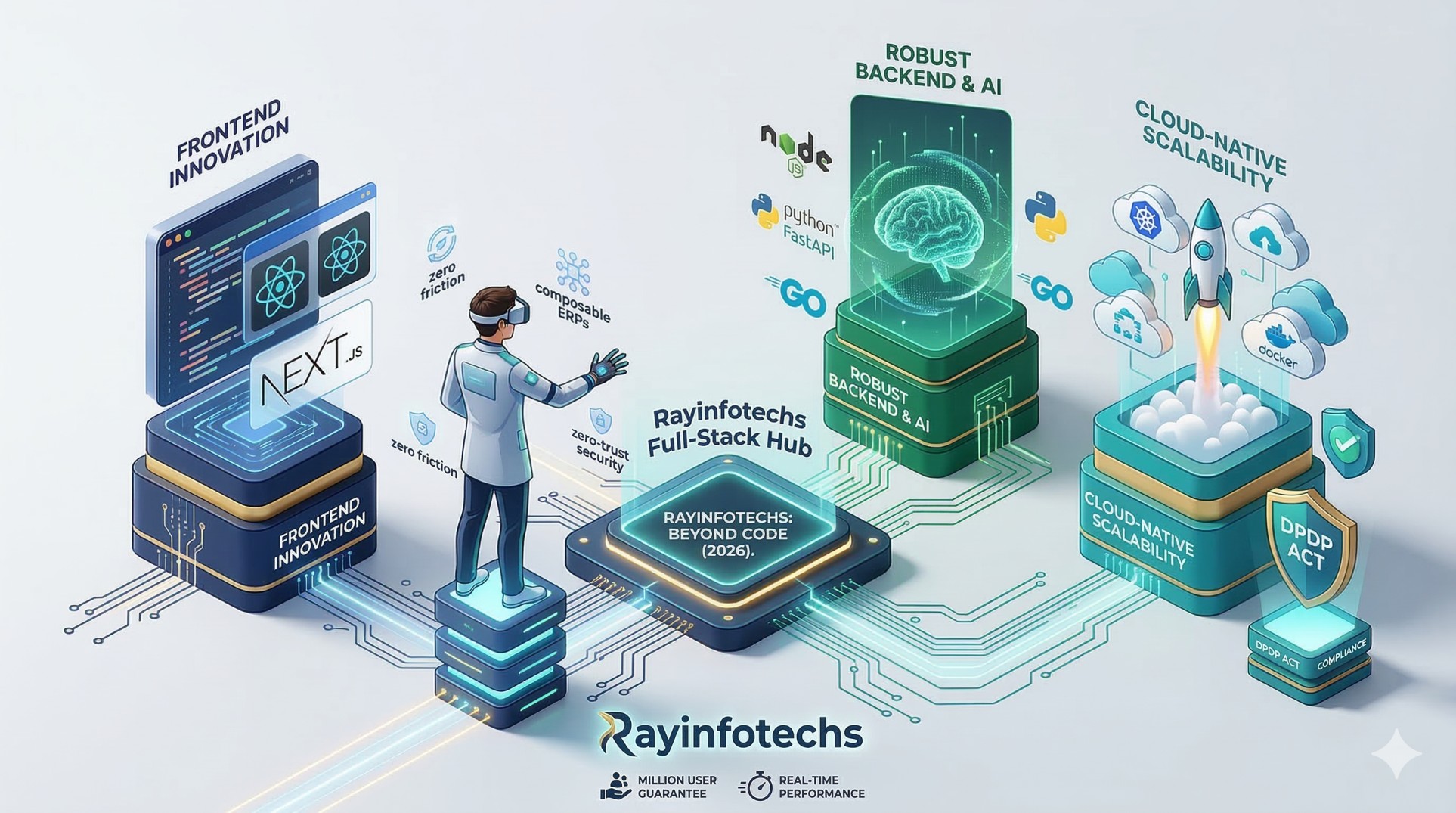
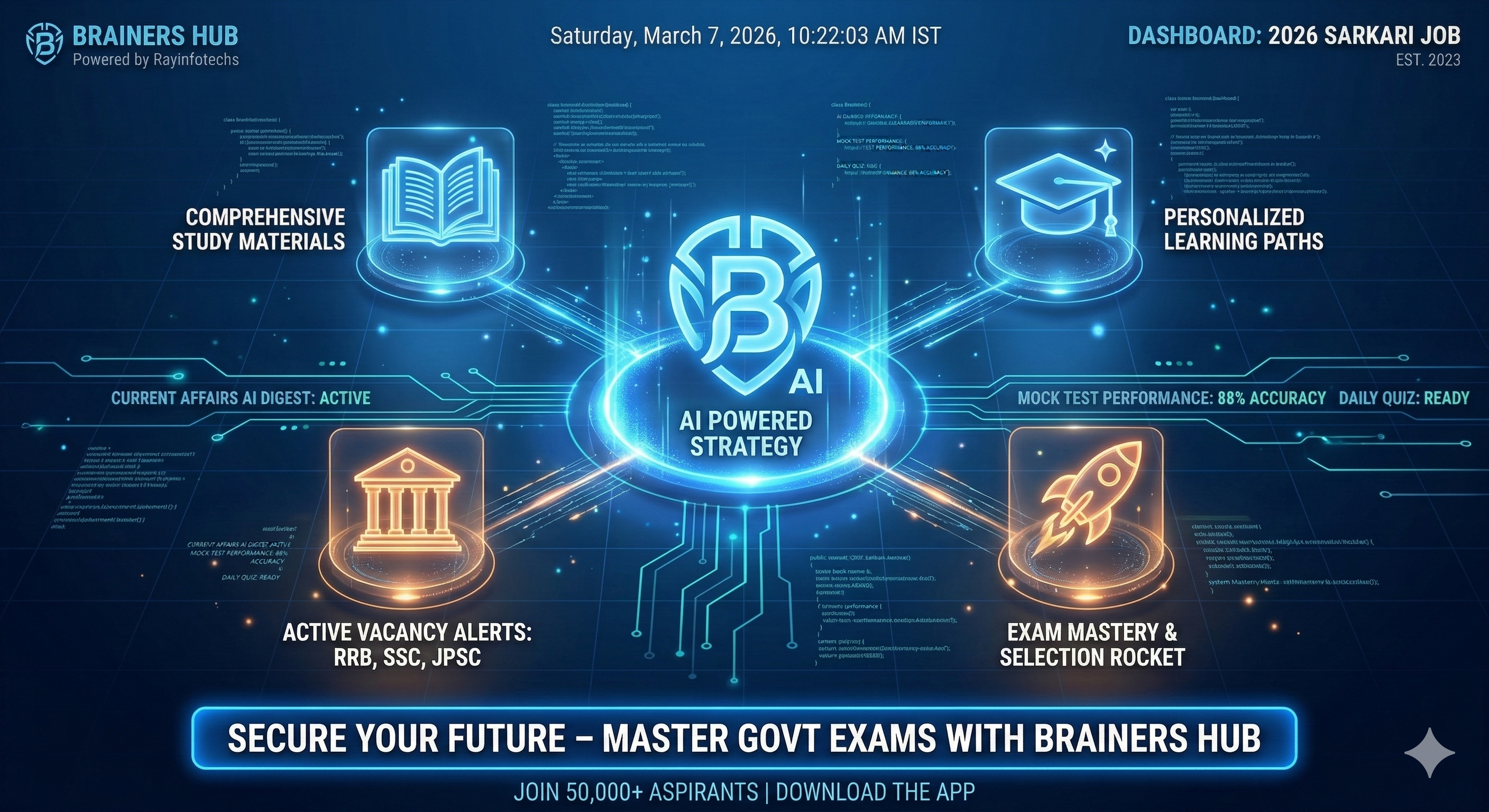
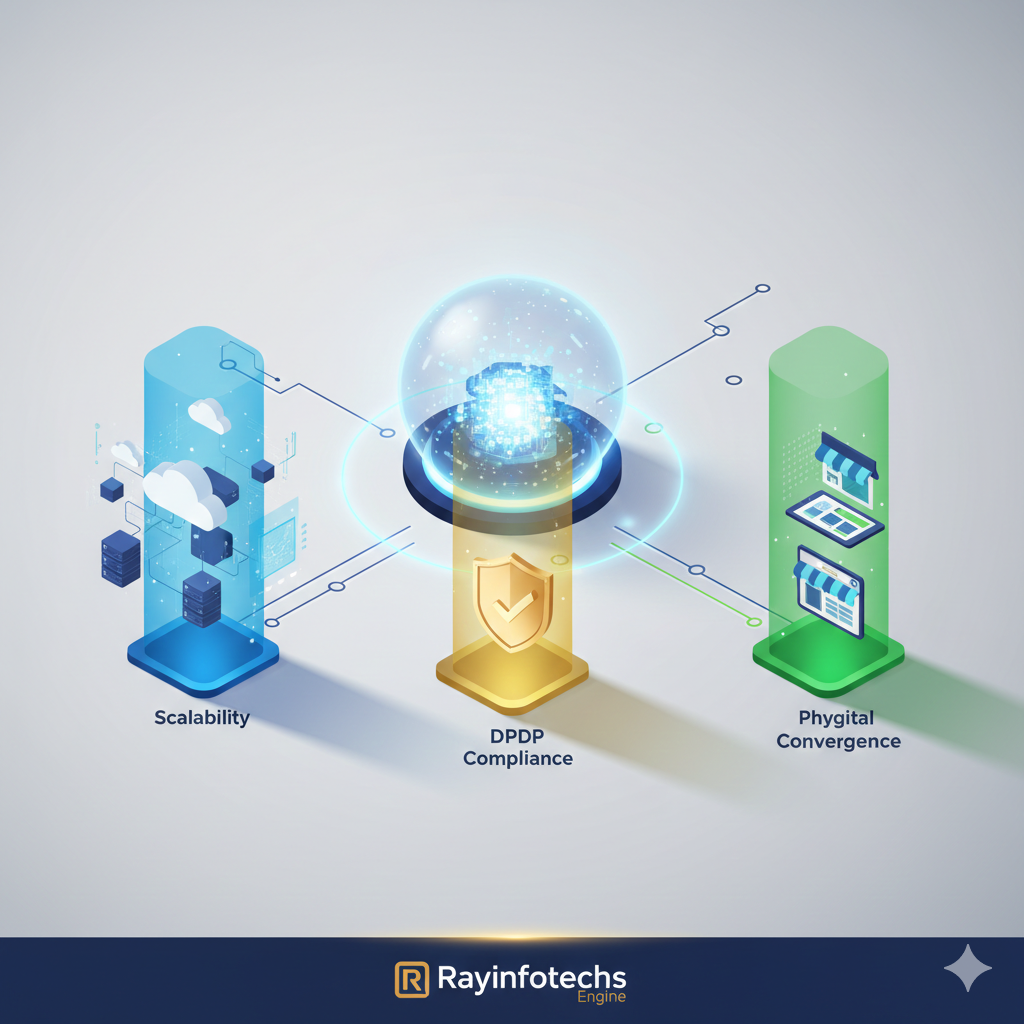
Zero-Downtime Scaling: Built on cloud-native Kubernetes and Docker, our platforms (like Brainers Hub) can now scale from 100 to 1 million concurrent users during peak result or recruitment waves without a glitch.
Rayinfotechs is redefining how users interact with software through Generative UI:
Adaptive Interfaces: Our web and mobile front-ends (built on React.js and Flutter) now use Generative UI principles. The interface literally "morphs" based on user behavior, highlighting the tools you use most while decluttering the rest.
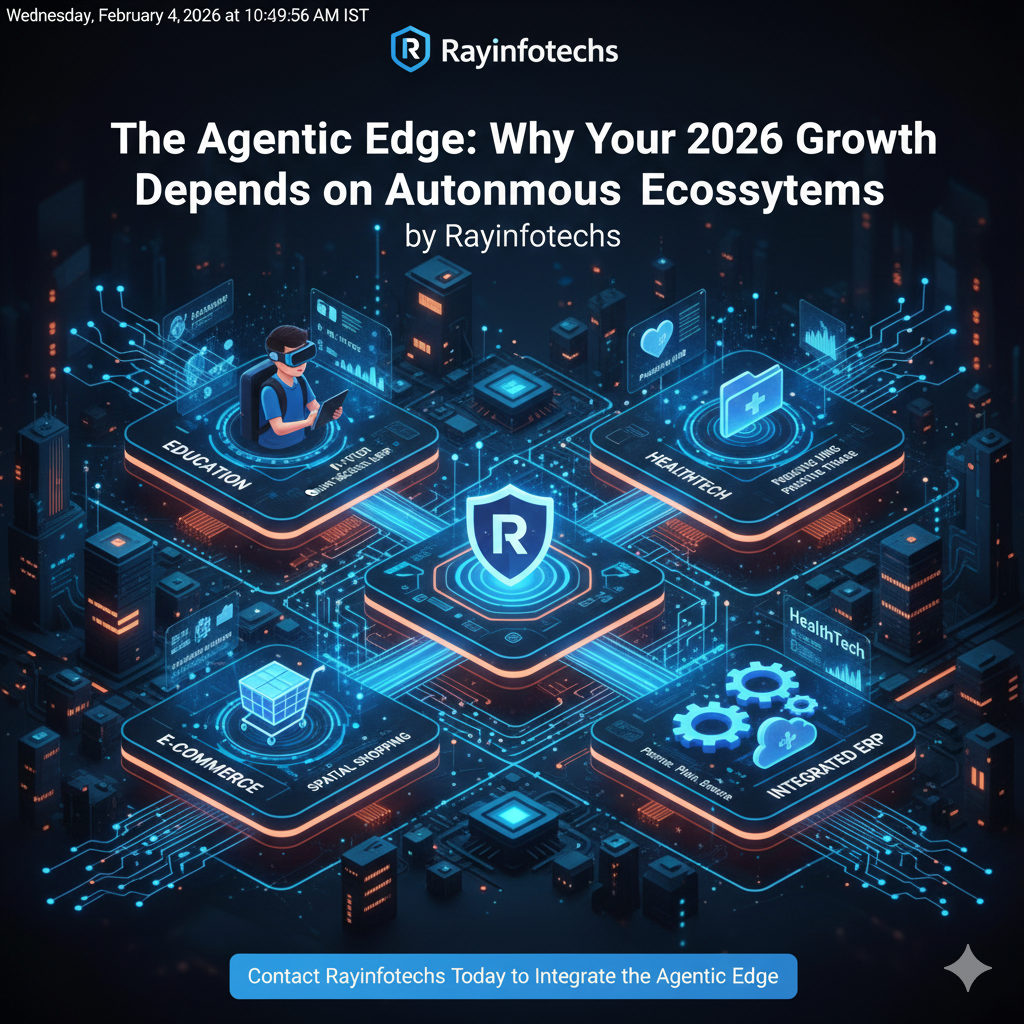
Spatial Shopping & Learning: E-commerce and EdTech portals now support AR-immersive views directly in the browser and app, increasing student retention and customer conversion by up to 30%.
Security is no longer an add-on; it's the core.
Zero-Trust Framework: Every piece of software follows strict Zero-Trust protocols.
Legal-Tech Automation: Our platforms are now automatically compliant with India’s DPDP (Digital Personal Data Protection) Act 2026, handling data consent and privacy logs so you can focus on growth.

 Live Test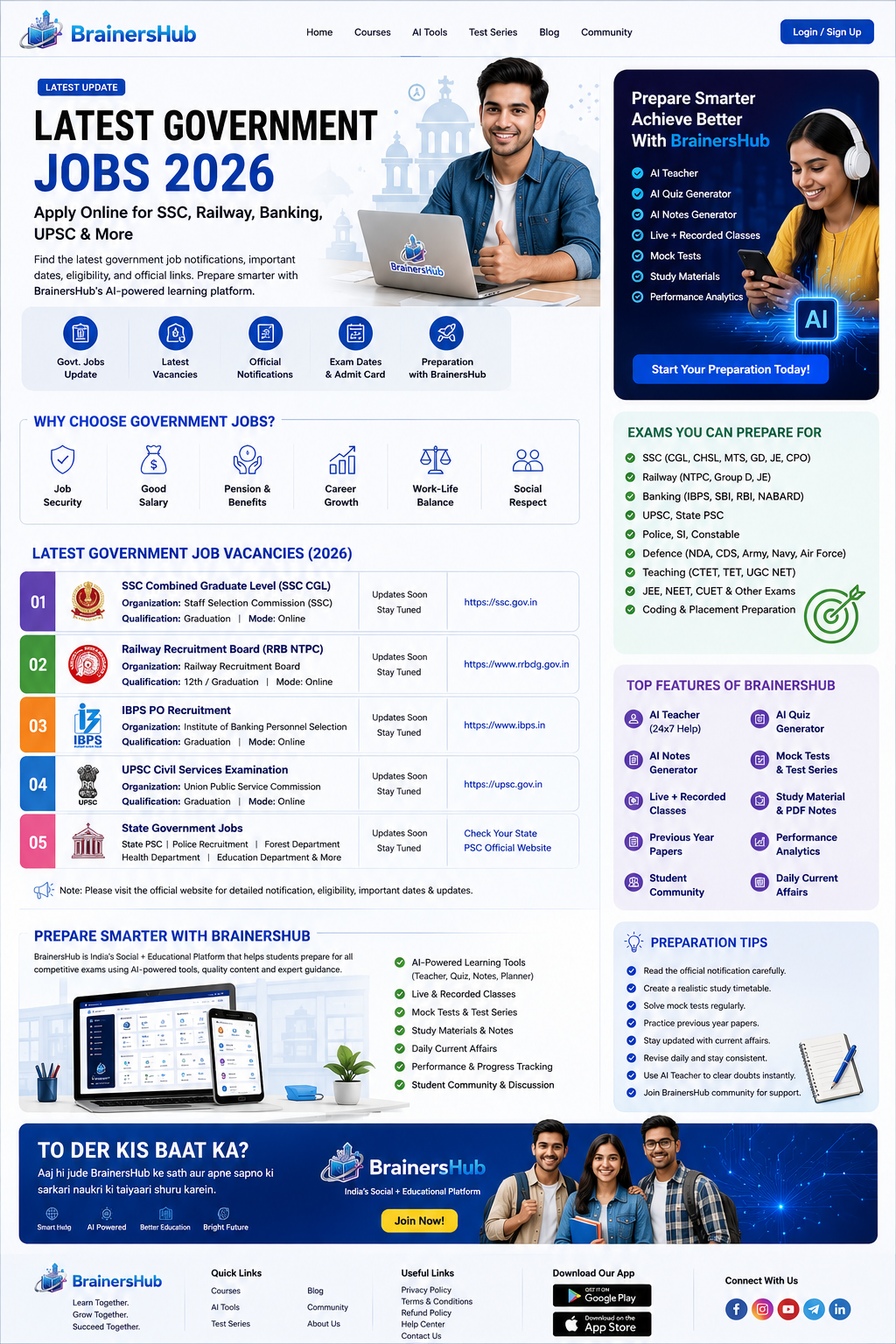





































.png)